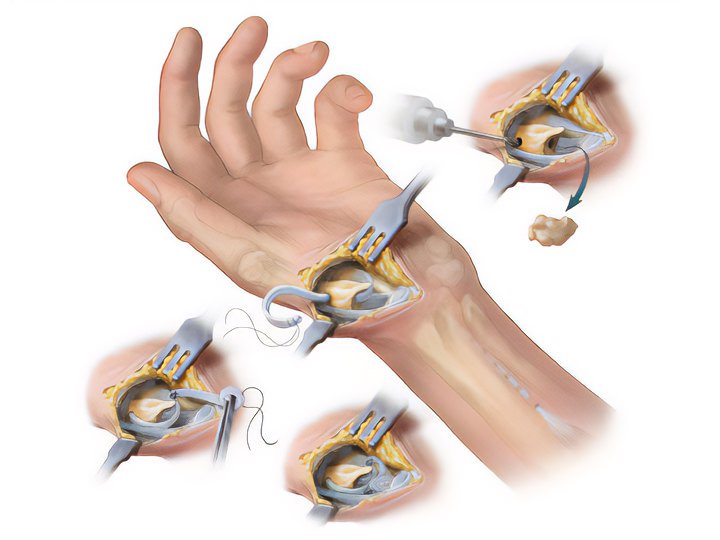
Thumb carpometacarpal (CMC) arthroplasty is a surgery for patients with thumb CMC joint arthritis who continue to have symptoms despite nonsurgical treatment.
The thumb is made up of three bones:
In many cases, your doctor will recommend that you try conservative (nonsurgical) treatments before considering surgery. This may include:
If these treatments don’t work, or the surgeon believes the condition is too severe to avoid surgery, then surgery is recommended.
Imaging. Typically, you will have X-rays taken before the surgery. This helps the surgeon see how severe the arthritis is and whether there are other conditions that need to be treated at the time of surgery. X-rays also may help the surgeon plan for the type of surgery to be performed; there are several types of CMC arthroplasty procedures to choose from.
Health conditions. Prior to surgery, you should avoid injury to the skin over the thumb. If there is a wound over the surgical site, the procedure may be delayed to avoid infection.
If you are diabetic, you will often be encouraged to keep your blood sugar control as tight as possible. This reduces the risk of post-operative infection and wound issues.
Also to reduce the risk of infections and wound complications, smokers will typically be encouraged to avoid smoking for several weeks prior to the surgery. Learn more about Orthopaedic Surgery and Smoking
Work and home arrangements. You should expect to be sore after surgery for several days to weeks. Thus, you should make arrangements at home and at work to account for this.
Talk to your employer before your procedure about potential missed days or work restrictions.
Anesthesia. For the procedure, patients are often made sleepy, and the surgical site is numbed with medication. Sometimes, before the surgery, the entire arm may be numbed by an anesthesiologist in a procedure known as a “block.” This leads to excellent pain control during and after the surgery in many cases.
Most surgeons will apply a tourniquet to the arm to prevent bleeding during the surgery. Some surgeons will keep the patient awake during the surgery and use a cocktail of numbing medicine and blood vessel constricting medicine to provide pain control and prevent bleeding during the surgery without using a tourniquet.
A team member will talk with you about how you’ll be sedated for surgery. Most people get general anesthesia and a nerve block. General anesthesia puts you into a deep sleep. The nerve block numbs your shoulder so that pain control can continue after you wake up from general anesthesia. The surgery usually takes 1 to 2 hours.
After surgery, you’ll rest in a recovery area for a short time. X-rays will be obtained. Your shoulder will be in an immobilizer. Don’t try to move your shoulder unless you’re told to do so.
How long you stay after surgery depends on your individual needs. Many people can go home that same day.
Your provider will diagnose lordosis with a physical exam.
They’ll look at your posture and check your spine for any unnatural curvature. They’ll check to see if the lordotic curve is flexible. If it moves with you when you bend your neck or low back you’ll be less likely to need treatments or surgery.
They might also screen you for scoliosis and kyphosis and other conditions that affect your back and spine.
If your provider notices signs of lordosis in your spine, you might need some imaging tests to help them know exactly what’s going on inside your body, including:
How lordosis is treated depends on where it is along your spine, and if it’s causing any symptoms.
Most people don’t need any treatment. If you have symptoms like neck or back pain, you’ll probably only need over-the-counter NSAIDs (like aspirin or ibuprofen) and stretching and strengthening to treat your symptoms. Talk to your provider before taking an NSAID for longer than 10 days.
You’ll likely need to visit your provider every few months to monitor the lordosis to make sure the curve hasn’t gotten more severe.
If the lordotic curve gets worse over time, or if it’s not flexible, your provider might suggest a few treatments, including:
You don’t have to stop exercising or playing sports with lordosis. In fact, staying active can help strengthen the muscles around your spine and help reduce some symptoms. If you need surgery to repair the curve in your spine, you might need to avoid certain physical activities while you’re recovering. Talk to your surgeon or provider about what to expect.
Visit your provider as often as they suggest to monitor any changes in your spine.
Following a healthy diet and exercise plan helps improve your overall health.
Talk to your provider if you notice any changes in your back, especially if you experience new symptoms like pain or a loss of feeling in your limbs.
There are several types of braces. Your provider will discuss your options so you can find the right brace for your child.
Aenean porta orci nam commodo felis hac ridiculus fusce fames maximus erat sed dictumst blandit arcu suspendisse sollicitudin luctus in nec